
Meet an Excellence in Teaching Awards educator: Sarah Lansinger
July 30, 2026
We’re featuring some of the educators who were recognized with Excellence in Teaching Awards for making a significant impact on students’ academic growth or proficiency during the 2025-26 school year.
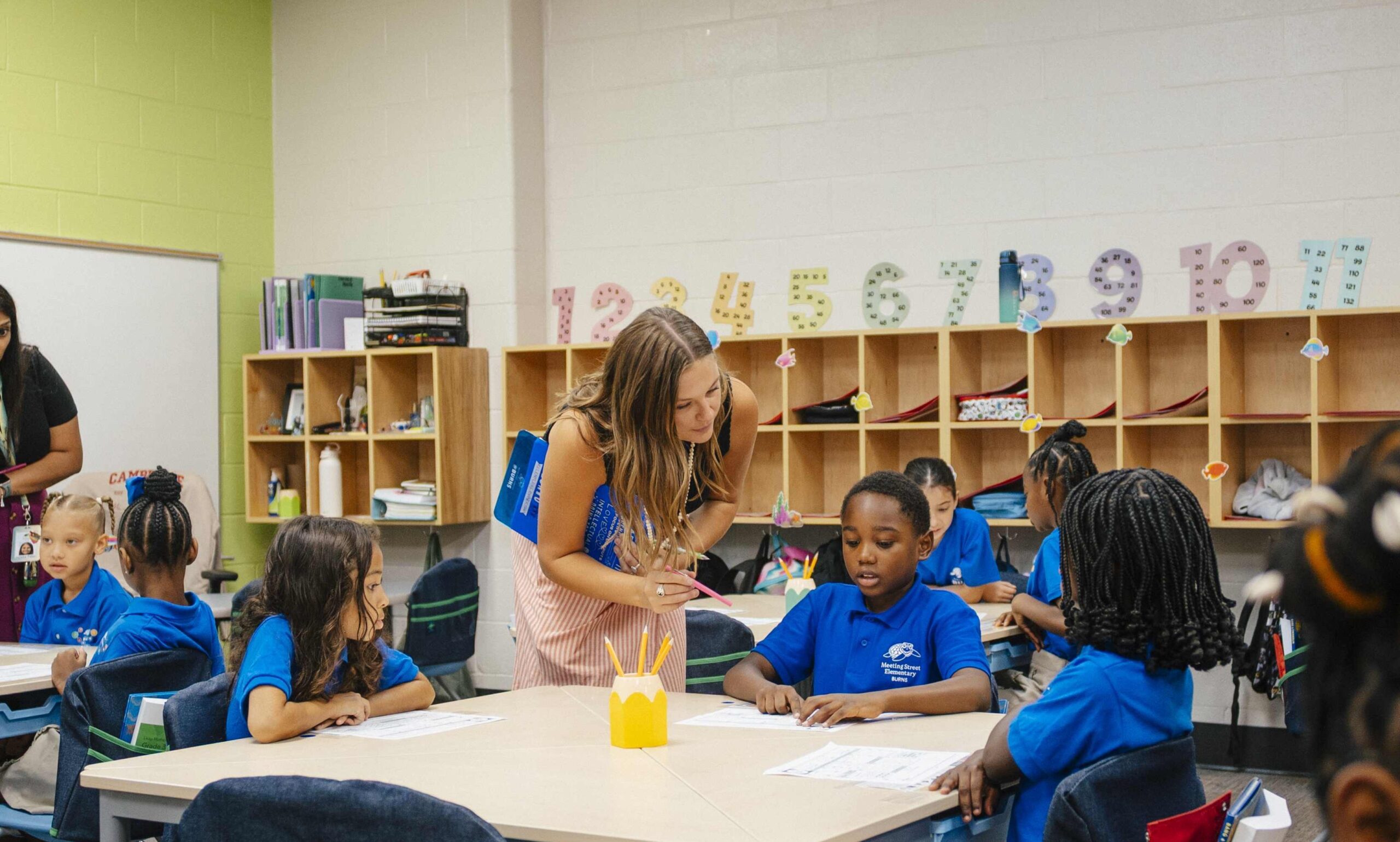
Sarah Lansinger, who’s taught for three years, taught third grade math at Meeting Street Elementary – Burns. Her students’ Magnitude of Growth in math was 1.96, which means they grew 96 percent more than expected in one academic year.
How has the Excellence in Teaching Awards made a difference in your life, personally and/or professionally?
Receiving the Excellence in Teaching Awards has made a meaningful difference in my life both personally and professionally. I moved to Charleston in 2023, and the cost of living has become increasingly expensive over just the past few years. This award has helped provide the financial stability I need to build a life here while also continuing to do the work I love. I have been able to purchase a reliable car, afford a comfortable place to live and invest in my mental and physical well-being. These opportunities have gone a long way in how I am able to show up each and every day for my students and colleagues. Professionally, the Award affirms that the hard work we do in the classroom is important and impacts the success of our students. While making a difference in my students’ lives will always be my biggest motivation, the Excellence in Teaching Awards is one of many things that motivates me to continue working hard, growing as an educator and showing up at my best for my students.
Can you describe a particularly successful lesson or unit you’ve taught, and what made it effective?
One successful unit I taught was a third-grade multiplication and division unit. One key component was spending daily time on multiplication fast facts so that students had a strong foundation. By the time they were seeing more complex, multi-step word problems, they had the confidence to spend more mental energy on choosing appropriate strategies for solving rather than being stuck on the basic facts. Another key component that made the unit successful was allowing students to do the heavy lifting throughout lessons. As I planned my lessons, I intentionally planned for anticipated misconceptions I knew my students might have. I show-called student work (or projected it for the entire class to see), and the class had the opportunity to debate, identify and correct their own mistakes through conversations with peers, rather than me giving them the answer. I was very intentional when planning my questions in each lesson in order to guide students through their thinking without just giving them a procedure to follow. This helped students reach a conceptual understanding on their own.
What are your thoughts on the importance of professional development and continuous learning for educators?
From being a first-year teacher at Burns to now, the investment Meeting Street Schools has put into professional development has been a crucial part of who I am and continue to grow into as a teacher. The continuous coaching, collaboration and opportunities to continue learning from experienced educators have made me feel confident and well-prepared in my classroom. I think professional development is essential in the education world today because our students are constantly evolving in how they learn, process information and engage in the classroom. The professional development we do here is so meaningful because it allows us to reflect, practice and refine our instruction throughout the school year. At Meeting Street Schools, our professional development is grounded in research so that we can adapt to these constant changes in order to meet the needs of all of our learners. Providing us with professional development shows me how committed my school is in helping both teachers and students reach their highest potential. I believe that prioritizing teacher growth alongside student growth has positively impacted outcomes schoolwide.
What are some ways you build strong relationships with your students, and how do these relationships contribute to their academic success?
I believe that building strong relationships with my students is the foundation of a strong, impactful learning experience. I prioritize getting to know my students on a personal level. I like to learn about their interests, goals, hobbies and families through daily conversation, interactions and classroom activities. I work to create a classroom where they feel safe, valued, supported and respected. This allows them to take risks and also keep pushing when the work is hard. I also think building a partnership with my students’ family members is so impactful to the student. I make an effort to communicate with families consistently to celebrate student wins, while also sharing expectations. When they see that they have a team at school and at home working together to support them, it builds trust and accountability.
